ECS P4M800-M7 Motherboard Review
This is a small but fully functional motherboard with an LGA775 socket, meaning it supports all processors for this socket. Well, almost all... After all, it has the right chipset...
+ Click on the photo to enlarge!
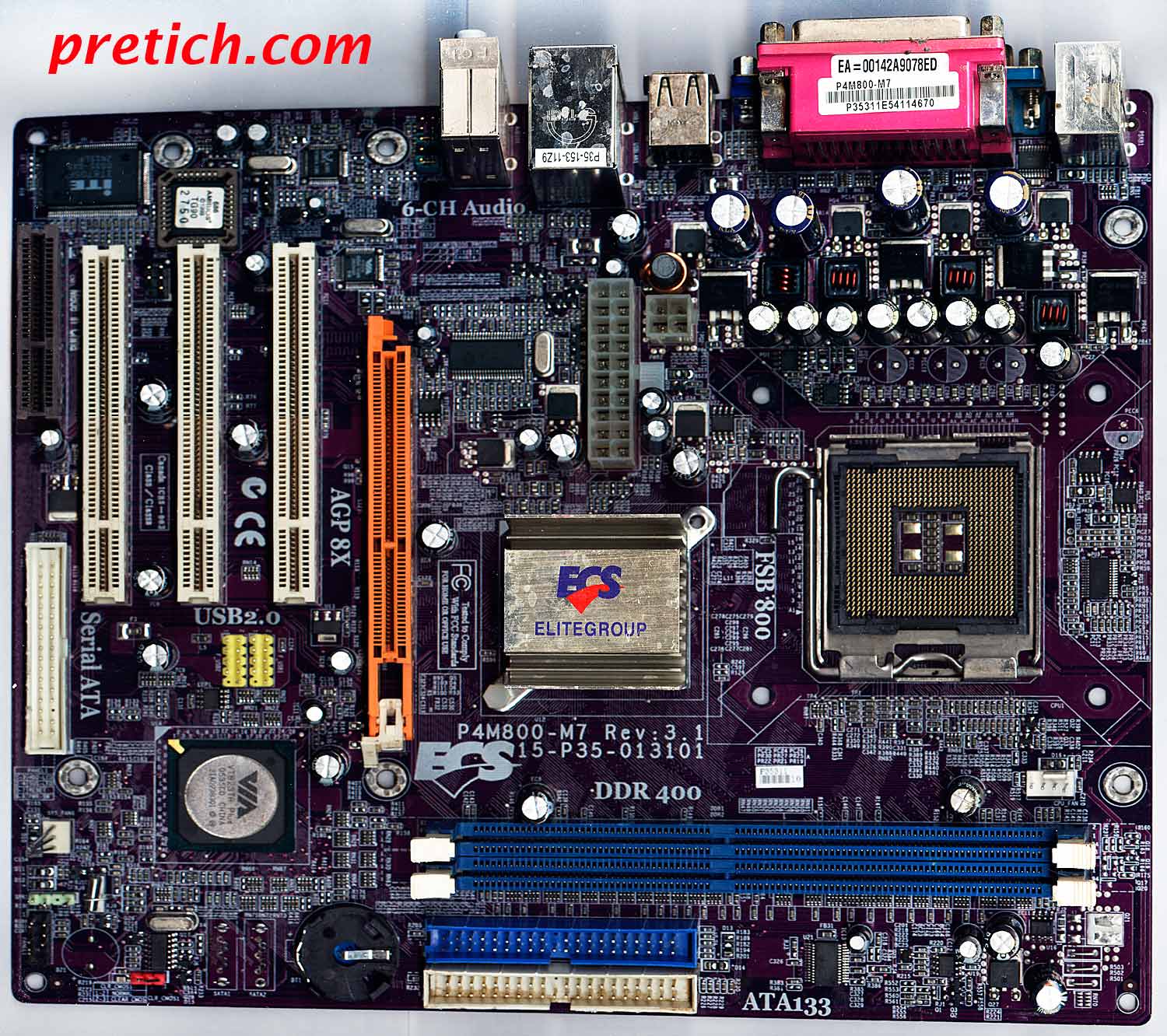
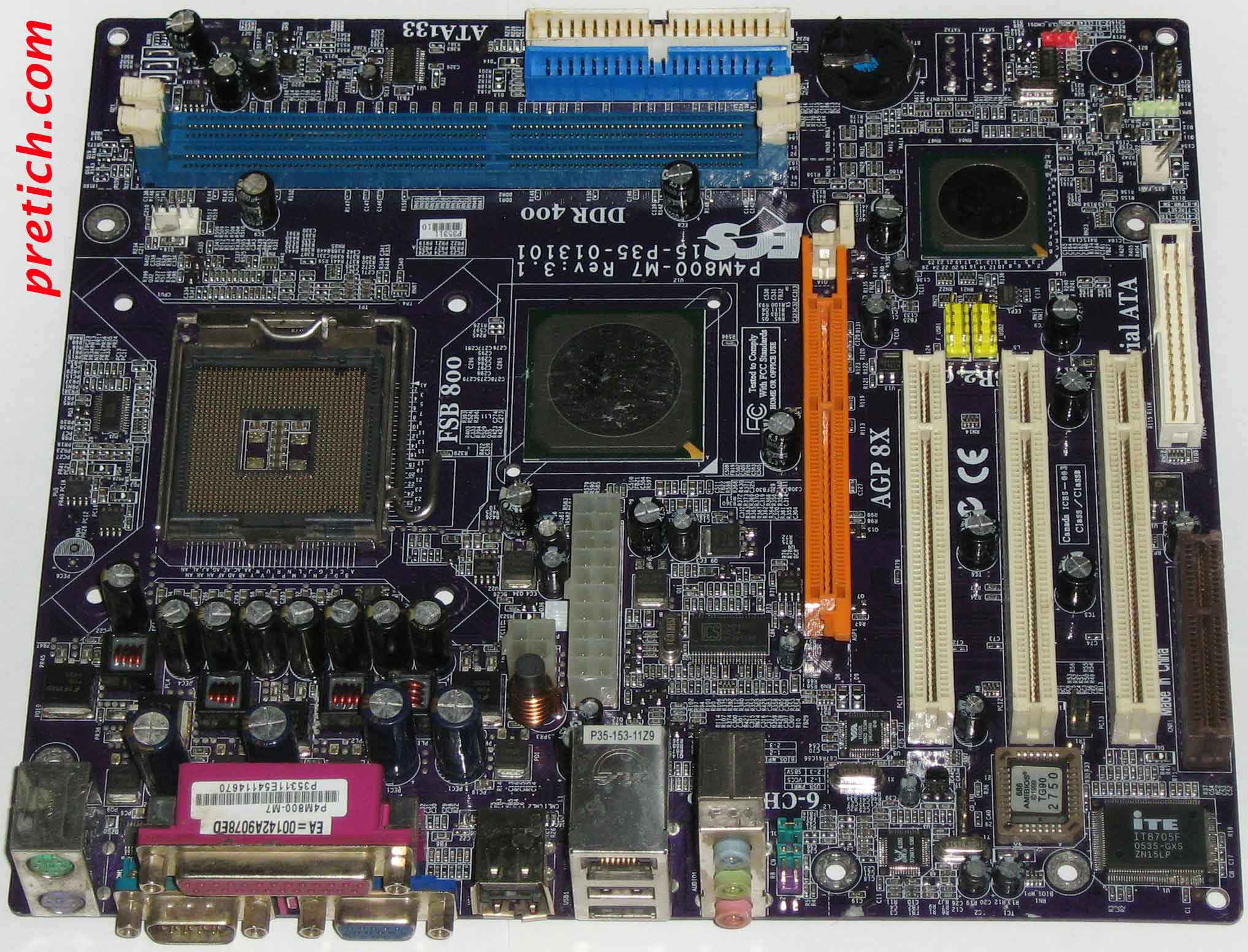
There's nothing particularly interesting about this motherboard externally… except its small size, which means it can be installed in a compact case.
System Logic
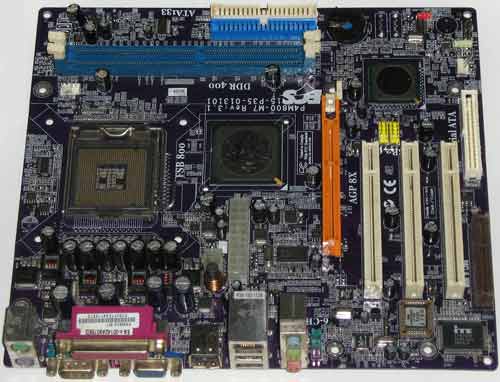
This motherboard's chipset is as follows: VIA P4M800 Northbridge – it's covered by a relatively small aluminum heatsink, which can get quite hot during operation, but since it's located next to the processor socket, the cooler keeps it cool. It has an integrated S3 UniChrome Pro 2D/3D Graphics adapter, which consumes a maximum of 64 MB of system memory. It's completely unsuitable for computer games! Furthermore, the Southbridge is a VIA VT8237R, uncooled and barely warms up.
Supports Intel Pentium 4 / Pentium D / Celeron D processors (including Pentium Extreme Edition) with an 800/533 MHz FSB. Hyper-Threading Technology support.
RAM is disappointing – single-channel mode and a maximum of 2 GB... DDR400/333 2.5V SDRAM.
The board has connectors: one AGP 8X/4X for a graphics card, three PCI slots, and one CNR slot. The Southbridge supports four Ultra DMA133/100/66 and two SATA drives – hard drives or optical drives. RAID0 and RAID1 are supported.
The integrated audio is based on a Realtek ALC655 chip. This is a popular and widely available 6-channel audio CODEC, compatible with AC'97 version 2.3.
The LAN (local area network) is based on a VIA VT6103L 10/100 Mbps Fast Ethernet PHY controller.
Everything else is stock, both internally and externally. The motherboard form factor is Micro-ATX, and its dimensions are 244 x 220 mm.
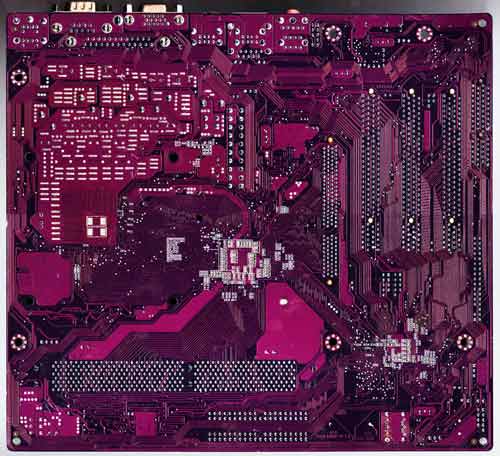
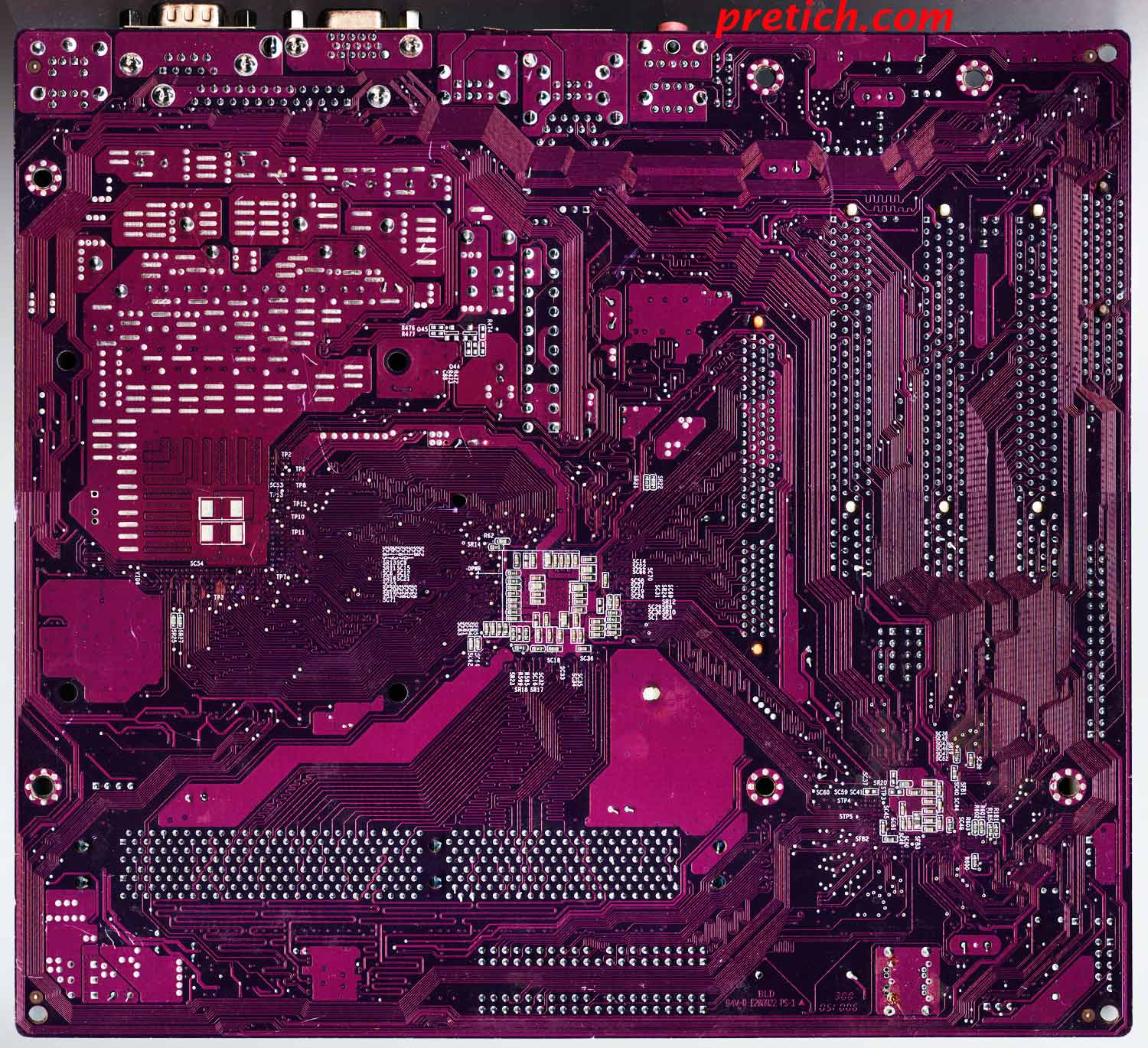
The back of the motherboard is unremarkable.
To sum it up
Of course, when it first launched, it was an extremely budget-friendly solution. The ECS P4M800-M7 Rev:3.1 was also very inexpensive. It wasn't suitable for gaming or multimedia PCs; its primary purpose was office computers, for study, and simple work.
Of course, it was a solution for those with low incomes, but the poor chipset limited it to anything more. Mikhail Dmitrienko, specially for PRETICH.com
*** |